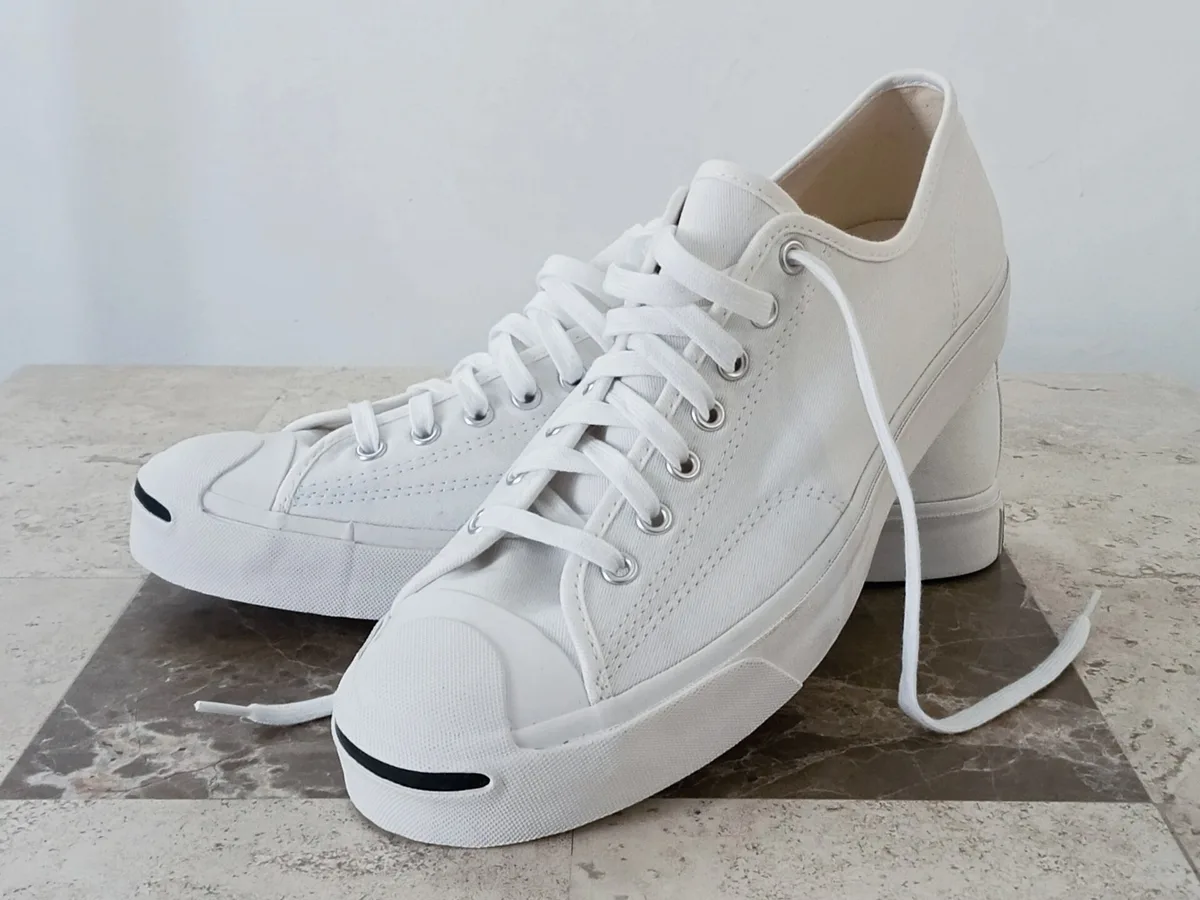
Does expensive technology last longer than cheap technology? Sometimes, but the price tag itself proves nothing. A higher price can buy better materials and sturdier construction. It can also buy a brand name, a nicer box, or features that have nothing to do with how long the thing works.
The honest answer is that price and lifespan are related, loosely, through the cost of materials and engineering — not through price alone. The useful question is not "is it expensive?" but "what did the money go to?" That question can be answered, and the answer changes by product, by maker, and by year.
What does "technology" actually mean here?
A plain technology definition helps before any comparison. Technology is simply the application of knowledge to solve a practical problem — a sewing machine, a phone, a laser cutter, a zipper. It is not a synonym for "electronics" and not a synonym for "new." Under that definition, a well-made pair of scissors is technology, and so is a body scanner in a fitting room. Readers following this should also see Body Scanning Gave Apparel Real Population Data, and Brands Still Barely Use It.
The word "myth" deserves a definition too, because the price-quality belief is one. The Cambridge Dictionary defines a myth as a widely told but false story — an ancient tale, or a belief many people hold that is not true. The idea that expensive always equals durable fits the second sense: a popular belief that survives because it feels true, not because it is.
That belief persists for a reason. Roland Barthes, the French philosopher, argued that myths work as a form of communication, carrying complex ideas in a simple, digestible form — a point summarized in a survey of myth examples by The Helpful Professor. "Expensive means better" is exactly that kind of shorthand. It compresses a complicated judgment about materials, engineering, and service into one number on a tag.
Why the myth feels true
Price tracks cost, and cost sometimes tracks durability. Better materials cost more. Tighter tolerances in manufacturing cost more. Paying engineers to design a hinge that survives ten thousand openings costs more than not doing that. When a maker spends money in those places, the product can genuinely last longer, and the higher price reflects it.
But price also tracks things that never touch the product's lifespan. Marketing budgets, retail margins, packaging, celebrity campaigns, and the simple signal value of a big number all push prices up. A garment-care gadget can carry a premium because of how it looks on a shelf in a flagship store, not because of what is inside it. None of that spending makes the motor last a day longer.
There is a third case, less discussed: cheap technology that outlasts its price class. Some low-cost products are simple, and simplicity is durable. Fewer parts mean fewer things to break. A basic mechanical timer can outlive a feature-rich electronic one, because the timer has almost nothing in it that can fail.
What actually determines how long a device lasts
Four factors do most of the work, and only one of them shows up clearly in the price.
- Materials. Metal gears outlast plastic ones under the same load. Higher-grade fabrics resist wear longer. This is where price correlates most honestly with lifespan.
- Design for repair. A device built with standard screws, replaceable parts, and published spare parts can be kept alive. A glued, sealed one cannot, whatever it cost.
- Software support. For anything with a chip in it, lifespan is often decided by how long the maker keeps updating the software. Hardware can be fine while the software around it ages out.
- Usage and care. The same model can last three years in one home and ten in another. How it is used, stored, and cleaned matters as much as how it was made.
Notice that only the first factor is visible in the price. The other three are invisible at the point of sale, which is precisely why the price tag is such a weak predictor.
Planned obsolescence and the repair question
The durability conversation also runs into a structural problem: some products are designed with a limited working life, and some are simply hard to fix. The two are related but not identical. A product can fail early by accident or by design; a product can also last long but be unrepairable when it finally does fail.
Repairability has become the sharper issue for apparel-adjacent technology. A sewing machine with a stocked parts list can run for decades. A smart fitting-room mirror with a proprietary screen and no spare-parts channel may become an expensive dead panel the day support ends. The expensive item in that pair is not the durable one.
This is where the myth does real harm. If a buyer treats price as a proxy for longevity, the most repairable product can lose to a better-marketed one. The counter-habit is simple to state, if harder to practice: ask what breaks, whether the part exists, and who will fix it — before asking what it costs.
Our analysis: how to read a price tag like an industry insider
The apparel industry offers a useful lens here, because it lives with this exact question at industrial scale. A factory deciding between an automated cutting system and a manual table does not ask which machine costs more. It asks what the machine changes: cutting accuracy, fabric waste, labor hours, and how long the machine stays serviceable. The same reasoning scales down to a single purchase. We covered a connected angle in Automated Cutting Buys Sub-Millimeter Accuracy, but Fabric Waste Hinges on the Marker.
Read a premium price as a claim, not a fact. The claim is: "money went into this product." The verification steps are unglamorous but effective.
- Identify what the premium is attached to — materials, engineering, service network, or brand.
- Check whether the maker sells spare parts and publishes repair information.
- For connected devices, look at how long the maker has supported older models in the past.
- Separate the purchase price from the cost of owning it: repairs, consumables, and eventual replacement.
None of these steps requires a lab or a budget. They require treating the price as one input among several, which is what professional buyers do as a matter of routine.
What the evidence supports, and what it does not
What can be said with confidence: durability comes from materials, design, repairability, support, and use. Price sometimes reflects those things and sometimes reflects everything else. The belief that expensive technology lasts longer is a useful rule of thumb only when the premium is visibly attached to the parts that wear out — and a misleading one everywhere else.
What remains unknown is the harder part. There is no single, independent score that ranks products by true lifespan across categories, so most buyers are choosing on partial signals: warranty length, brand reputation, teardown reports, return policies. Each is a clue. None is the whole answer.
The practical takeaway sits between the extremes. Very cheap technology often cuts corners somewhere, and the corners it cuts are frequently the ones that fail first. Very expensive technology often spends part of its premium on things durability never needed. The middle of the market, and the fringes of both ends, reward the buyer who asks the four questions above. Price is a rumor about quality. Durability is a fact about construction — and the two are only occasionally the same fact.