Digital wardrobes are collections of clothing that exist only as computer files. A virtual garment is modeled in 3D software, fitted to a photo or an avatar, and shown online — on social media, in games, or in a shopping app. It cannot be worn to dinner, because there is nothing to wear. The most important qualification is that its value sits entirely in the image, not the object.
The word itself is doing quiet work here. According to Merriam-Webster, "digital" means carried out by computerized technology, especially in an online context, or composed of data in binary form. A digital garment is exactly that: data shaped like clothing. Treat it as data and the whole category makes sense — it can be copied perfectly, sold instantly, and rendered on any body the software allows.
How is a virtual garment made?
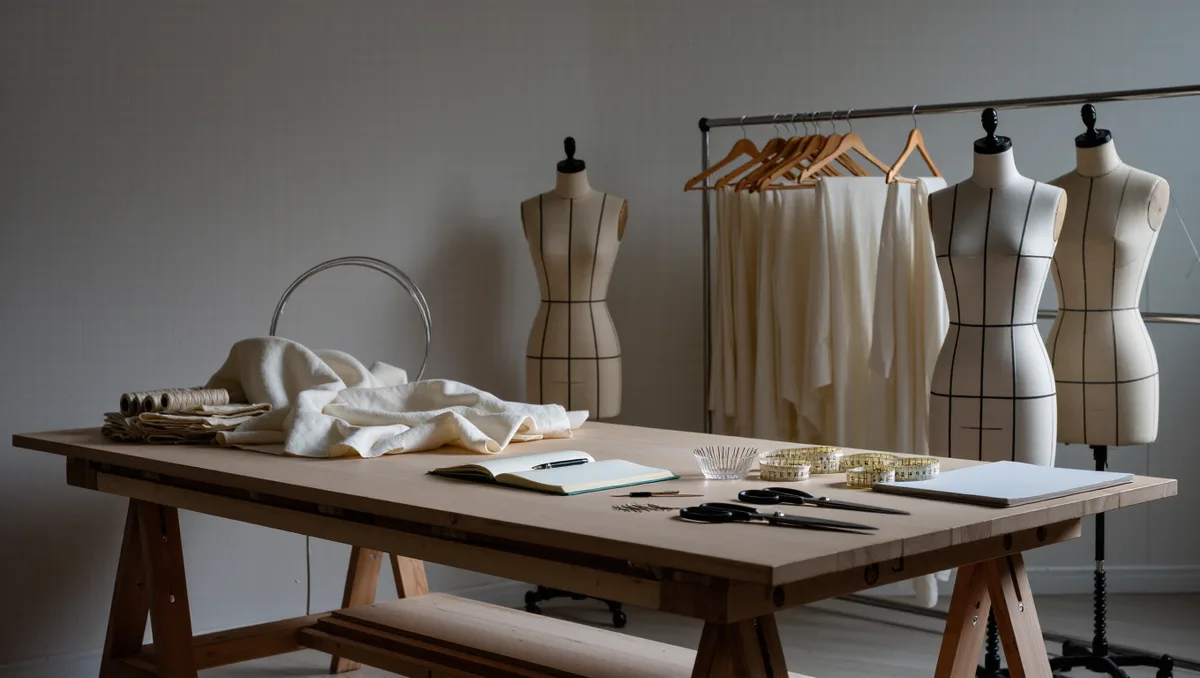
The process starts the same way a physical sample does: with a pattern. A designer drafts the pieces, then drapes them over a digital mannequin inside simulation software. The software calculates how the fabric would fall, stretch, and wrinkle, using physics rather than pins. The result is a garment file that can be photographed, animated, or fitted to a customer's own picture.
This is the same family of tools the industry already uses behind the scenes. As covered in the magazine's piece on 3D sampling, brands now build digital samples to shrink development calendars — though the physical sample has not been replaced. Digital-only fashion takes that workflow one step further and stops at the file. No mill, no cutting table, no shipping carton. This connects to our earlier piece, 3D Sampling Can Shrink Development Calendars, but It Has Not Replaced the Physical Sample.
Two details separate the craft from a filter. First, real pattern-making skill still applies; a badly drafted digital garment will drape badly, and the simulation will show it. Second, the rendering has to survive scrutiny. A garment meant to be worn in a photo needs believable folds, shadows, and contact with the body. That is where much of the actual work sits.
Where do people actually wear this?
Three settings dominate, and they work differently.
- Photo dressing. A buyer sends in a picture and receives it back with the garment rendered onto their body. The output is an image for social media. This is the closest digital fashion gets to a fitting room.
- Game skins. A skin is a costume for a character inside a video game. Players have bought these for years, long before fashion houses paid attention. The purchase changes nothing about gameplay; it changes how the character looks.
- Avatar wardrobes. In virtual worlds and social platforms, an avatar's outfit functions as a public presentation — the same role clothes play at an event, minus the room.
The common thread is audience. In every case the garment is worn for people looking at a screen. A detail of place still matters, just a different kind of place: the platform sets the lighting, the pose, and who is invited.
What does ownership mean when the item is a file?
Ownership of a digital garment is really permission to use it. The buyer holds a license defined by the seller's terms, sometimes recorded as a unique token on a blockchain. What the buyer generally does not hold is the file itself in a freely usable form. Copying, reselling outside the platform, or altering the design may be restricted.
This is the sharpest difference from a physical wardrobe. A cotton shirt can be lent, altered, and handed down without asking anyone. A virtual shirt lives inside the platform that rendered it. If the platform closes, the wardrobe goes with it. Readers who follow the magazine's technology coverage will recognize the pattern: the value of a connected system depends on whoever runs it.
Scarcity is manufactured instead of material. A physical garment is scarce because production is limited by fabric, machines, and labor. A digital garment is unlimited by nature, so sellers create limits — numbered editions, timed drops, one-of-one pieces — and price the scarcity rather than the making.
Why does the fashion industry care?
For brands, digital clothing is a low-cost way to extend a design language into places where their customers already spend time. A house can dress an avatar, sell a photo-only piece, or test a silhouette on screen before committing to production. The margins look different from physical goods: no raw materials, no returns of worn items, no warehouse.
It also feeds back into the physical side. The same 3D garment files used for virtual drops are the files brands use for digital sampling and, increasingly, for made-to-order decisions. A design proven popular on screen can be produced in small quantity with less guesswork. The magazine's earlier reporting on demand forecasting noted how badly prediction fails where fashion is most fashionable; on-screen attention is one more signal, imperfect but real. For related coverage, see Apparel Demand Forecasting Fails Exactly Where Fashion Is Most Fashionable.
There is a sustainability argument, and it needs careful handling. A digital garment avoids fabric, dye water, and shipping — that much is true by definition. But if the purchase substitutes for nothing, if it is an addition to a physical wardrobe rather than a replacement, the environmental claim thins out. Whose claim it is matters: a platform marketing its own footprint is a manufacturer's claim, not an independent finding.
What this means for getting dressed
"Wearing" has quietly split into two acts. One is covering a body in the physical world. The other is presenting an image to an audience through a screen. Digital wardrobes serve the second act, and they do it with the tools — pattern drafting, fabric simulation, rendering — that the apparel industry built for the first.
For the reader deciding whether this matters, the honest framing is modest. Virtual clothing is a genuine category with real craft behind it, and it is also young, platform-dependent, and priced on manufactured scarcity. It will not replace the closet. It adds a screen-shaped annex to it, and the annex is getting more traffic every season.
The evidence so far establishes what the garments are and how they are made and sold. What remains unknown is durability in the ordinary sense: which platforms, formats, and ownership models will still be standing in a decade. Fashion has outlived every technology that was supposed to transform it. The wardrobe, digital or otherwise, keeps what keeps working.