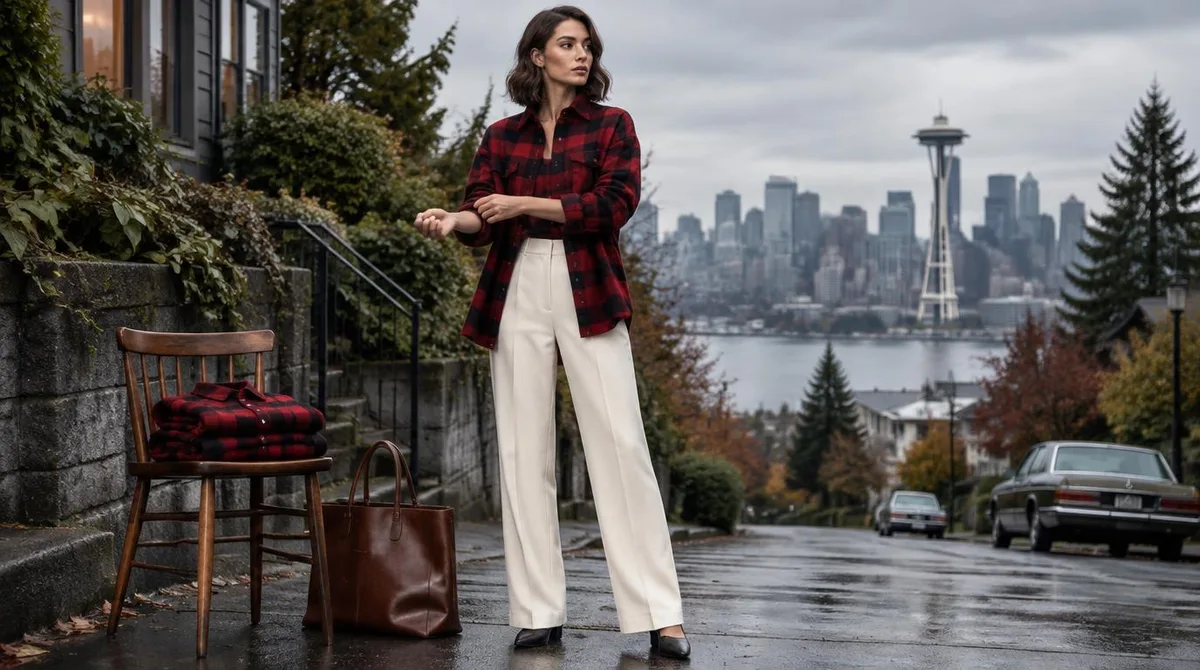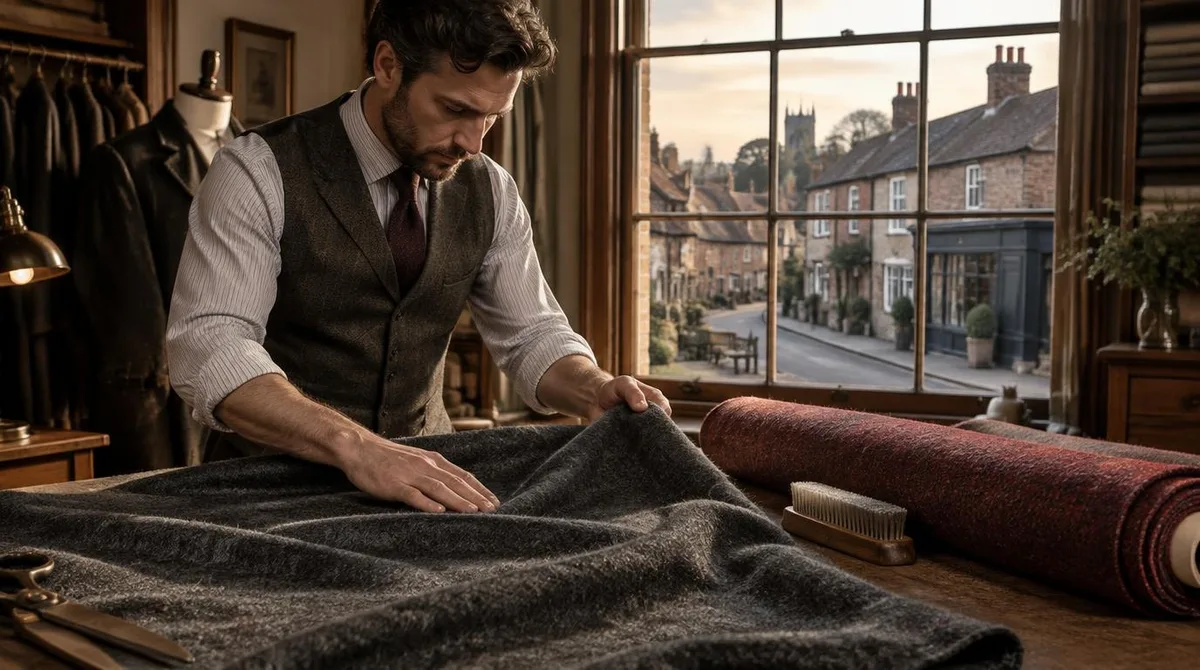
The flannel shirt earns its permanent spot the same way a good coat does: through the cloth, not the styling. Flannel is a soft, napped fabric, usually wool or cotton, brushed on one or both faces to raise a fuzzy surface that traps air. That nap is the whole point. It insulates without weight and drapes softer than a flat-woven shirt ever will.
What a flannel is not, strictly speaking, is a pattern. The word names the finish and the hand of the cloth, not the plaid. A solid-colour flannel is still a flannel; a crisp plaid shirting in unbrushed cotton poplin is not. The confusion is old and durable, and it matters when a buyer is comparing two shirts that look similar on a rail but behave nothing alike after three washes.
The word itself has drifted far from the mill. It now names a British luxury retailer too: Wikipedia's entry on Flannels (retail) traces the company to a menswear store Neil Prosser founded in Knutsford, Cheshire, in 1976, later absorbed in full by Frasers Group in 2017. A cloth name becoming a shop name is a small thing, but it says something about how thoroughly flannel entered the wardrobe vocabulary.
What actually makes a flannel a flannel?
Two things: the weave and the nap. Most flannel is a twill, a weave where the weft thread passes over and under warp threads in a staggered pattern, which leaves the surface slightly diagonal and allows a softer, more flexible hand than a plain weave. After weaving, the cloth runs through teasel rollers or abrasive brushes that lift the fibre ends into that characteristic fuzz.
Brush both faces and the cloth gets warmer and softer still, at the cost of a slight bloom in the pattern. Single-napped flannel keeps a cleaner face on the outside, which is why some shirting reads sharper while feeling the same inside. The looser the weave and the higher the nap, the more air the cloth holds, and air is what actually insulates.
Why does weight matter more than pattern?
Weight decides the job. A light flannel layers under a jacket without bulk; a heavy one stands nearly on its own as a shirt-jacket. Mills describe this in grams per square metre, and the number changes drape, warmth and how the shirt ages. The measurement itself is worth understanding before buying, because two shirts tagged the same size can sit on opposite ends of the scale — the mechanics are laid out in How Fabric Weight Is Measured, and Why a GSM Number Changes What You Get. For related coverage, see How Fabric Weight Is Measured, and Why a GSM Number Changes What You Get.
Heavier flannel also pills and shrinks differently. The brushing that makes the cloth soft leaves loose fibre on the surface, and friction turns that fuzz into little balls, most visible where a bag strap or a sleeve crosses the body. Washing does its own work on the cloth: the relaxation and felting that shrink flannel after a first wash are the same forces described in Why Fabric Shrinks After Washing. A cotton flannel bought to fit exactly will rarely stay that exact.
How did a workwear cloth become a wardrobe staple?
Flannel's route into everyday dress ran through utility. The cloth was warm, cheap and forgiving, which suited work shirts, then sportswear, then the general casual turn in menswear. Once the brushed check reached that stage, it stopped signalling a job or a region and started signalling comfort itself.
The current market reflects how wide the word now stretches. A brand called FLANNEL sells a women's line built on silk, sequins, ramie and linen, per its own new-arrivals page — fabrics with no brushed twill anywhere in them. When a name can sell an evening dress, it has detached from the cloth entirely. For a buyer, that means checking the fabric composition, not the label language.
What should a buyer actually check?
Four things, in order of consequence:
- Composition. Cotton flannel breathes and launders hard; wool flannel insulates more per gram but needs gentler care. A blend splits the difference.
- Nap side. Double-brushed cloth is softer and warmer; single-brushed keeps its face crisper. Hold it to the light to see the fuzz.
- Weight. Heavier cloth drapes into a shirt-jacket; lighter cloth layers. The GSM number, read correctly, tells you which you are holding.
- Seams and shrinkage allowance. A first wash will move the cloth. Cutting with room, or buying with the shrink in mind, is the practical answer.
Care labels carry the manufacturer's own instructions, and those words are regulated rather than decorative — the rules behind them are covered in How Federal Rules Dictate Every Word on a Clothing Care Label. This connects to our earlier piece, How Federal Rules Dictate Every Word on a Clothing Care Label.
How does flannel fit a long-life wardrobe?
On the longevity test, flannel does well, with one condition. The cloth is simple, the construction is simple, and a good cotton flannel softens with washing rather than degrading. The condition is fit at purchase: because the cloth moves in the first washes, a shirt bought tight has nowhere to go. The quiet test a piece has to pass — does it earn its place for a decade, not a season — is the same one applied across considered design, and flannel passes it more often than most seasonal cloth.
The styling question answers itself once the cloth is right. A flannel reads as workwear under denim, as tailoring's rough cousin under a wool coat, and as its own outer layer when the weight is heavy enough. What it resists is trend framing. The check palette shifts with the seasons, but the cloth underneath has not needed a redesign in a century, which is precisely why it never leaves.
What this means
The flannel shirt's permanence is not sentiment; it is construction. A brushed twill traps air, ages toward softer rather than worse, and asks nothing of the wearer except an honest first wash. The evidence here is material, not marketing: the nap, the weave and the weight do the work. Everything else — the pattern, the colour, the story a brand attaches to the name — is dressing on a cloth that was already complete.