Online orders follow a fixed pipeline — pick, pack, ship — because that sequence is the cheapest reliable way to turn a digital click into a physical parcel. A worker or machine finds the item (pick), puts it in a box with the right protection and paperwork (pack), and hands it to a carrier (ship). Each step costs labor, space, and time, and each one is designed around a simple constraint: an apparel warehouse may hold hundreds of thousands of items, and the pipeline has to find one of them in minutes.
The reason the pipeline looks the same at most apparel retailers is economics, not tradition. Every extra touch — every time a garment is lifted, scanned, folded, or re-binned — adds cost to the order. So the whole system is arranged to minimize touches while keeping mistakes near zero, because a mis-picked order that has to be returned and resent costs far more than the seconds saved by rushing the first pick.
What actually happens when an order arrives?
The moment a customer checks out, the order lands in a queue inside the warehouse management system — the software that decides who picks what, in what sequence, from where. The system does not simply send someone to a shelf. It batches orders, groups picks by zone, and routes workers along paths that shorten walking distance, because walking is usually the largest single slice of picking labor.
Warehouses are divided into zones for the same reason. Fast-selling basics sit in forward pick locations near the packing stations; slow movers sit deeper in the building, often on higher racks that only a lift truck can reach. Apparel adds its own wrinkle: the same sweater exists in many sizes and colors, so the system must send the picker to an exact bin, not a general shelf. A pick ticket for "medium, navy, style 4471" is precise for a reason — the picker should never have to choose.
How does picking work, and why are there so many methods?
Picking is where most of the labor in the pipeline lives, so it is where retailers experiment most. The main methods are worth spelling out:
- Discrete picking. One worker completes one order start to finish. Simple, easy to trace, but slow — the worker walks the whole building for a single parcel.
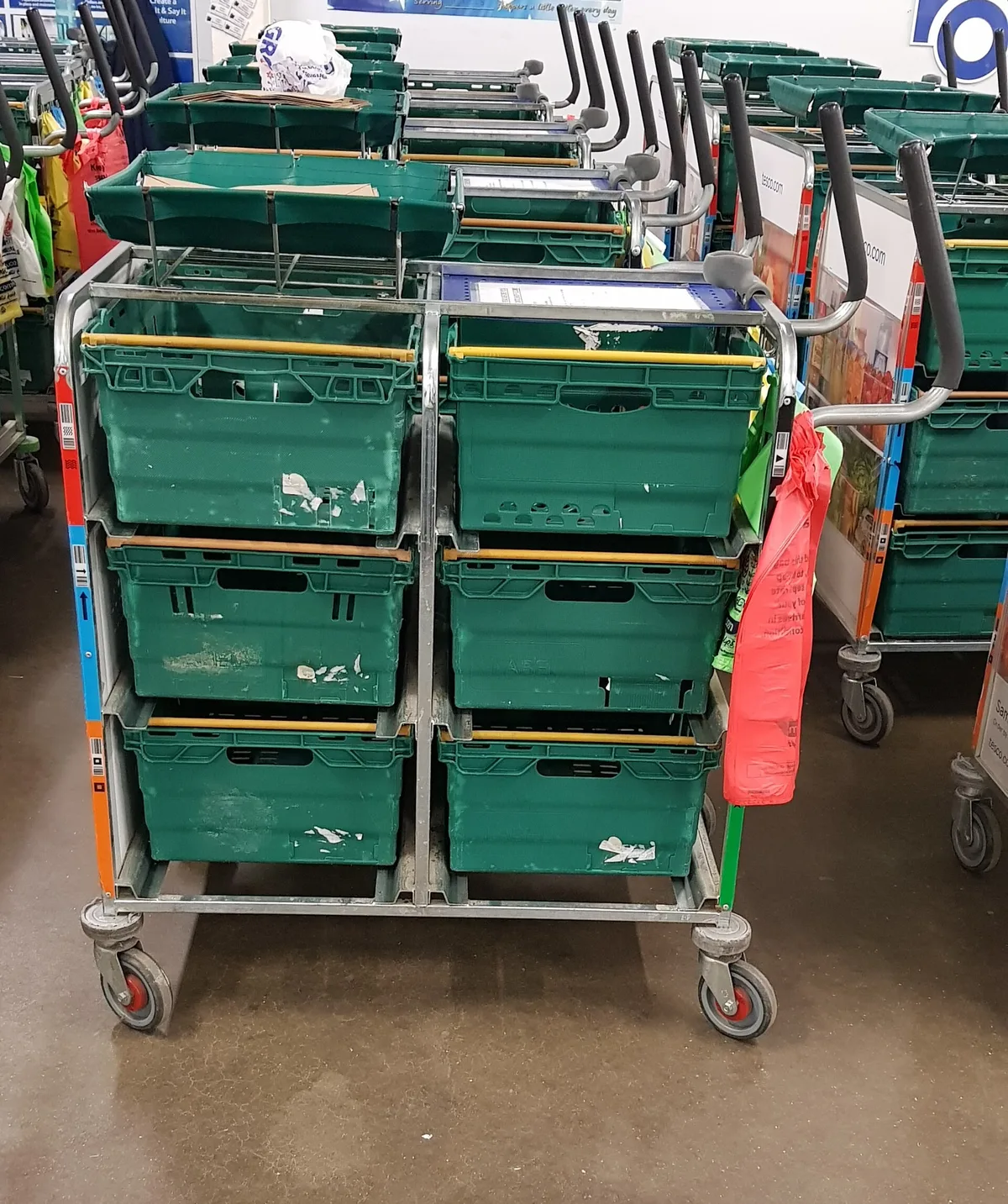
- Batch picking. One worker collects items for many orders in a single walk, then the items are sorted later. This trades sorting labor for walking time, and usually wins that trade.
- Zone picking. Each worker stays in one zone and picks only what lives there; the order moves between zones, often on a conveyor.
- Goods-to-person. Instead of people walking to shelves, robots or automated storage bring the shelf to the worker. The capital cost is high, so it suits large operations with steady volume.
Which method a retailer uses depends on order size and variety. A single-dress order favors batching; a multi-item order with mixed categories may favor zones. Apparel complicates everything, because soft goods are hard to automate — a folded knit handles differently from a rigid box, and machines that grip it reliably are expensive.
Why does packing cost more than it looks?
Packing looks like the easy step. It is not. The packer must choose the right carton or mailer, protect the garment — tissue, polybag, or nothing, depending on the item — include any inserts, and generate the shipping label. Carton choice matters more than it seems: a box too large wastes dimensional weight, the carrier billing method that charges for a package's volume as well as its weight. Retailers therefore invest in carton-sizing logic and, in bigger operations, machines that cut and fold a box to fit the contents.
Accuracy is the other hidden cost. The pack station is the last checkpoint before the parcel leaves, so scanners verify that what is in the box matches what was ordered. A wrong item that reaches a customer triggers a return, a reshipment, and two rounds of freight — several times the cost of the extra verification scan.
What happens at carrier handoff?
Shipping is a negotiation with physics and with carriers' rate cards. Parcels are sorted by destination and service level, stacked into trailers or containers, and delivered to a carrier hub, where the retailer's responsibility ends and the carrier's begins. Service level — ground versus expedited — is the customer-facing dial, and it is priced accordingly. The retailer's choice of where to hold inventory matters here too: a fulfillment center closer to the buyer shortens the last leg, which is the most expensive leg of the journey.
Where does the cost actually land on a $60 order?
Our analysis of the pipeline's structure suggests thinking of a $60 apparel order as paying four separate tolls, even though no public figure applies to every retailer and the mix varies widely:
- Picking labor — minutes of a worker's time plus the walking between bins, reduced by batching and routing software.
- Packing materials and labor — the mailer or carton, filler, label, and the seconds at the station.
- Freight — the carrier's charge, driven by weight, volume, distance, and speed.
- Error and returns allowance — the share of orders that go wrong and must be corrected, which quietly raises the average cost of every order, including the correct ones.
The returns toll deserves emphasis, because it compounds. A returned garment re-enters the building, gets inspected, re-bagged, and re-binned — a full second pipeline. That downstream process is covered in detail in What One Returned Garment Really Costs a Retailer to Process, and the scale of the returns channel overall is the subject of How Retail's $849.9 Billion Returns Channel Works, and Why the Fees Arrived.
What this means for the future of order fulfillment
The direction of travel is fewer human touches and tighter inventory visibility. Automation keeps moving into the pick, especially goods-to-person systems, while the pack step absorbs smarter carton logic. Meanwhile, the pipeline is no longer the only fulfillment path: buy-online-pickup-in-store routes orders through a store's back room instead of a warehouse, a different cost structure explained in BOPIS Operations Inside the Store: The Real Cost of Order Pickup. And none of it works without accurate counts — a pick is only as good as the inventory record behind it, which is the territory of Cross-Channel Inventory: How a Store Counts One Dress Across Web, App, and Rack. We covered a connected angle in Cross-Channel Inventory: How a Store Counts One Dress Across Web, App, and Rack.
The evidence here is structural rather than statistical: the pipeline's shape follows from the arithmetic of touches, walking distance, and freight pricing, and that arithmetic does not change with fashion cycles. What remains unknown, for any given retailer, is the exact split of those four tolls — companies do not publish their per-order fulfillment costs, so outside observers can map the machinery but rarely its precise bill.
Which returns the article to the word in its title. The question of why the pipeline works this way is, in the plain sense the Cambridge Dictionary gives — "for what reason or purpose" — answered by purpose itself: every quirk of the pick-pack-ship line exists to remove a touch, a step, or a mile, because each one of those costs money on every single order.