A repeat buyer who orders the same shirt year after year is running a one-person quality audit, and the audit increasingly fails. Per NBC News reporting on apparel quality, major brands have cut fabric quality to limit price increases, substituting lighter weights and higher synthetic shares where the outward style stayed identical. The pattern has a name in the trade — value engineering — and it explains the most disorienting retail experience of the mid-2020s: the garment that looks the same on the hanger and wears differently in a month.
How does a fabric switch stay quiet?
Because almost nothing about a garment's presentation is contractually tied to its cloth. Style numbers stay the same across seasons even when the bill of materials changes; product pages describe fit and color, not grams per square meter; and the only binding disclosure is the fiber-content label, which lists percentages but not weight, twist or finish. Per BBC Future's reporting on fabric fraud, even the stated fiber percentages have proved falsifiable at scale — the Welspun case moved hundreds of thousands of mislabeled sheets through a major retailer before detection. Against that baseline, a silent substitution of a 180-gram oxford for a 140-gram one is not deception by legal standards; it is a purchase-order change.
What does the substitution actually change?
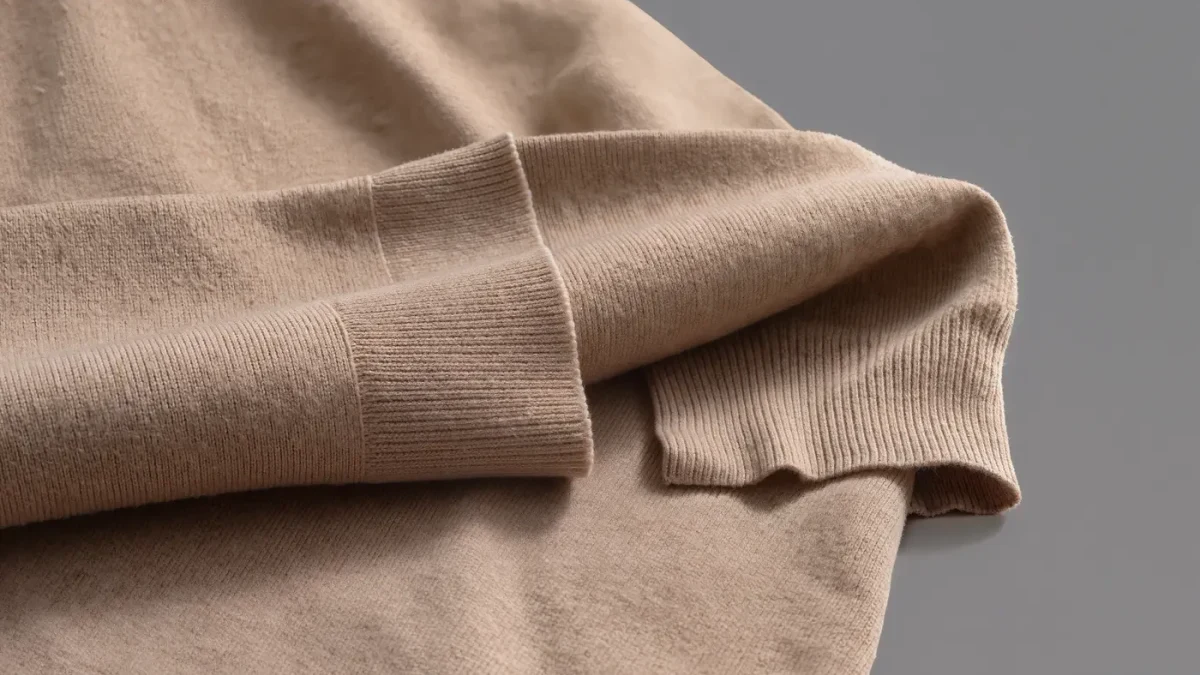
Weight first, then everything downstream. A lighter cloth in the same pattern hangs differently because drape scales with stiffness per unit area; a higher polyester share changes recovery, pilling and how the garment holds odor; a shorter-staple yarn pills sooner. Per BBC reporting from August 2026, synthetic content has become a consumer shorthand for exactly this drift — the perception problem is now strong enough that brands market their way back to cotton explicitly. The buyer's complaints are consistent across forums: the shirt pills at the collar, the tee goes translucent, the sweatshirt's inside loops flatten after five washes. Each complaint maps to a specific substitution a mill could name from touch.
How can a repeat buyer detect the change?
Three checks, all physical. Weigh the garment on a kitchen scale against the same size bought earlier — a change of more than about ten percent is a different cloth. Read the fiber label against the old one; percentages are the one spec that cannot legally drift. And stretch the ribbing of knits: recovery that lags the original indicates a changed elastane or loop construction. None of this requires expertise; it requires keeping one old garment as the reference standard, which is precisely what a repeat buyer already owns.
Why do brands accept the reputational cost?
Because the cost lands slowly and the margin lands immediately. Value engineering shows up in a quarterly gross-margin line; the complaint arrives scattered across returns and reviews, statistically invisible next to the price decision it protects. Per NBC's reporting, the pressure behind the substitutions is price-point defense: brands would rather thin the cloth than break a psychological price ceiling. The honest counterweight is disclosure, and a small number of brands now publish fabric weight on product pages. Until that becomes standard, the care label — the one line of spec the law compels — remains the repeat buyer's only contract.