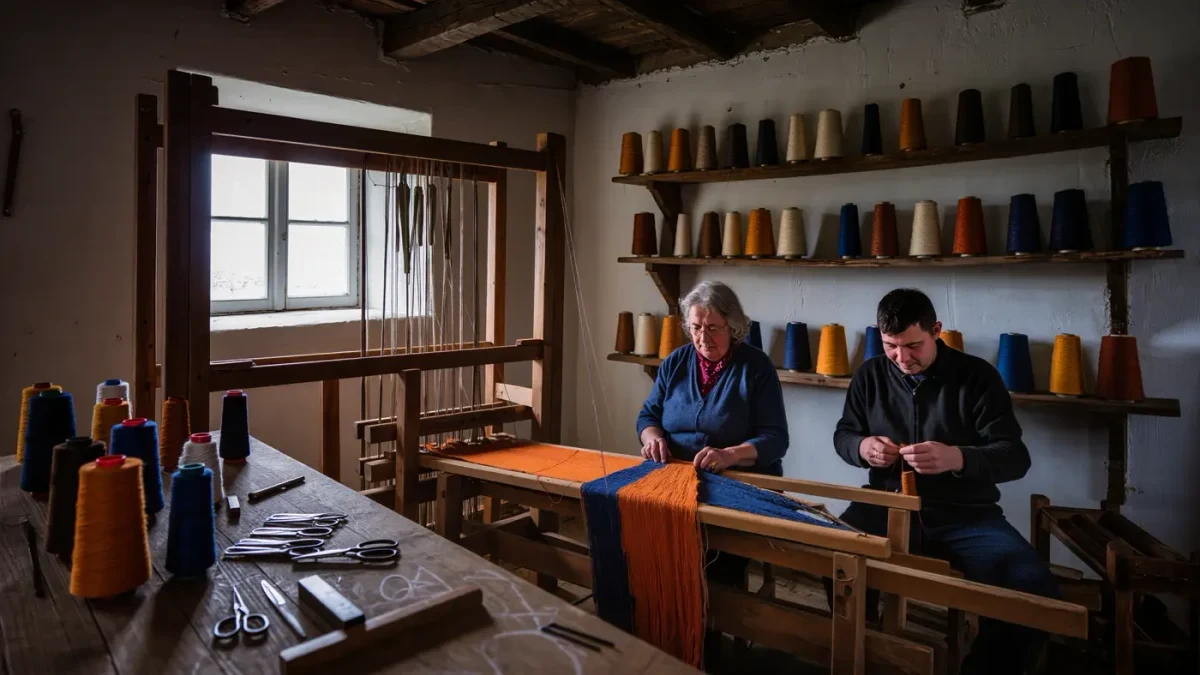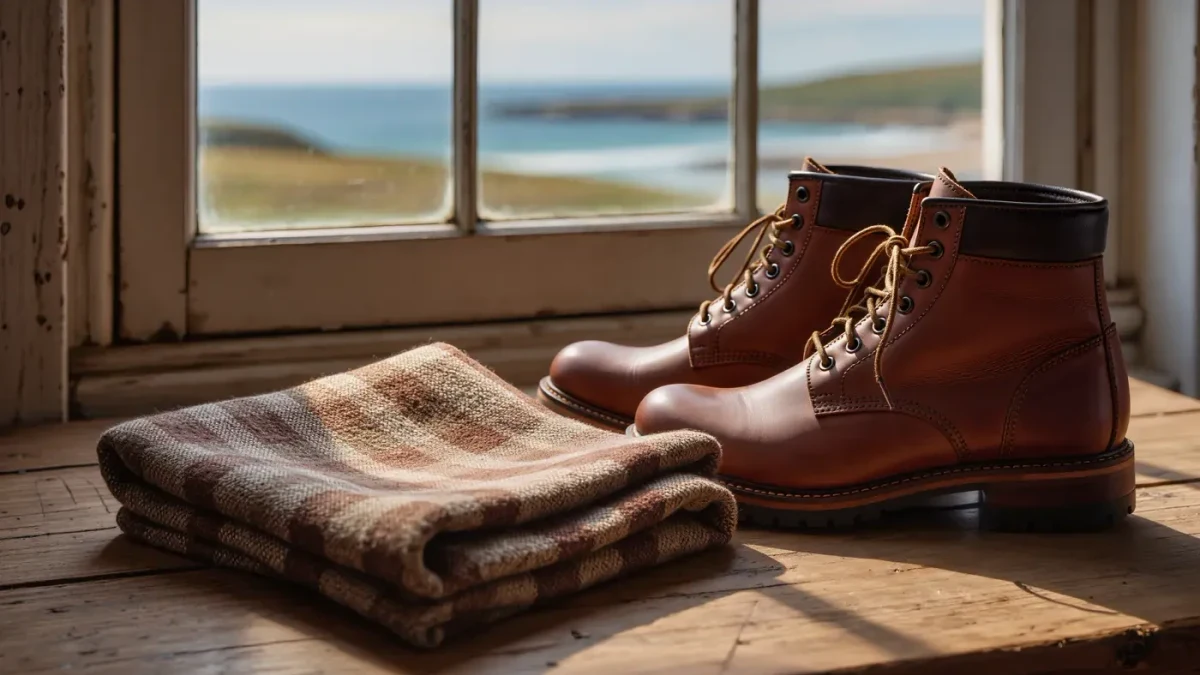
Cat Footwear reworked its Colorado boot in Harris Tweed cloth across three Outer Hebrides-inspired colorways, per trade coverage of the first collaboration between the work-boot brand and the certified Scottish mill. The pairing follows a now-standard script — Wrangler with Pendleton Woolen Mills, luxury houses queuing for Harris Tweed through the Campaign for Wool — in which an industrial brand rents several centuries of textile legitimacy by the season. The economics explain the repetition: the mill supplies not just cloth but a verifiable claim, and verified claims are the scarcest material in modern fashion marketing.
What does the certification actually guarantee?
Something rare: law. Harris Tweed is protected by the Harris Tweed Act, and the Orb mark certifies that the cloth was woven in the Outer Hebrides by islanders at their homes in pure virgin wool, per the Harris Tweed Authority's statutory definition. Per the certification model, every meter is inspected and stamped by the Authority's independent representative before it leaves the islands. That is a stronger claim structure than almost any sustainability label in fashion — a legislative definition, a physical mark, and an inspection regime — which is precisely why brands pay for the cloth rather than approximating its look. A boot 'inspired by' tweed carries none of this; the collaboration exists to carry all of it.
Why does the mill benefit from industrial partners?
Volume with a floor under price. Per Harris Tweed Hebrides' public disclosures, the mill has invested £1.5 million in its Isle of Lewis operation to secure its British wool supply chain — capital spending that requires steady order books. Handwoven cloth cannot chase fast-fashion pricing, so the mill's strategy is to anchor itself in the premium segment through luxury commissions while smoothing volume through industrial licenses like the Cat Footwear deal. The boots sell in numbers a luxury house cannot order, at a price point the mill can accept because the loom time was already scheduled. Both sides are buying predictability.
Does the collaboration change the cloth?
Less than the marketing implies, and that is the point. Per the statutory definition, the tweed in a work boot is the same certified cloth as in a tailored coat — the Act does not offer a lighter, cheaper tier. What changes is the exposure: a boot takes abrasion, flex and moisture that upholstery-grade tweed rarely meets, so the collaboration doubles as a durability demonstration for the mill and a credibility transfer for the brand. Per the colorway descriptions in the launch coverage, the mill wove to the brand's palette within its traditional dyeing framework, which is the standard division of labor: the brand chooses colors, the mill defends the definition.
Can the model saturate?
Its constraint is physical, so no. Handweaving capacity in the Outer Hebrides is finite by definition — the Act requires island handweaving — which caps how many collaborations can exist at any time and keeps the cloth's claim scarce. Per the Authority's structure, demand above capacity resolves through price rather than dilution, the opposite of what happened to 'heritage' as a marketing adjective. For the buyer, the Orb mark on a boot's tongue patch is therefore the reliable signal: it certifies the one thing in the collaboration that marketing cannot counterfeit, because counterfeiting it is a legal offense rather than a branding choice.