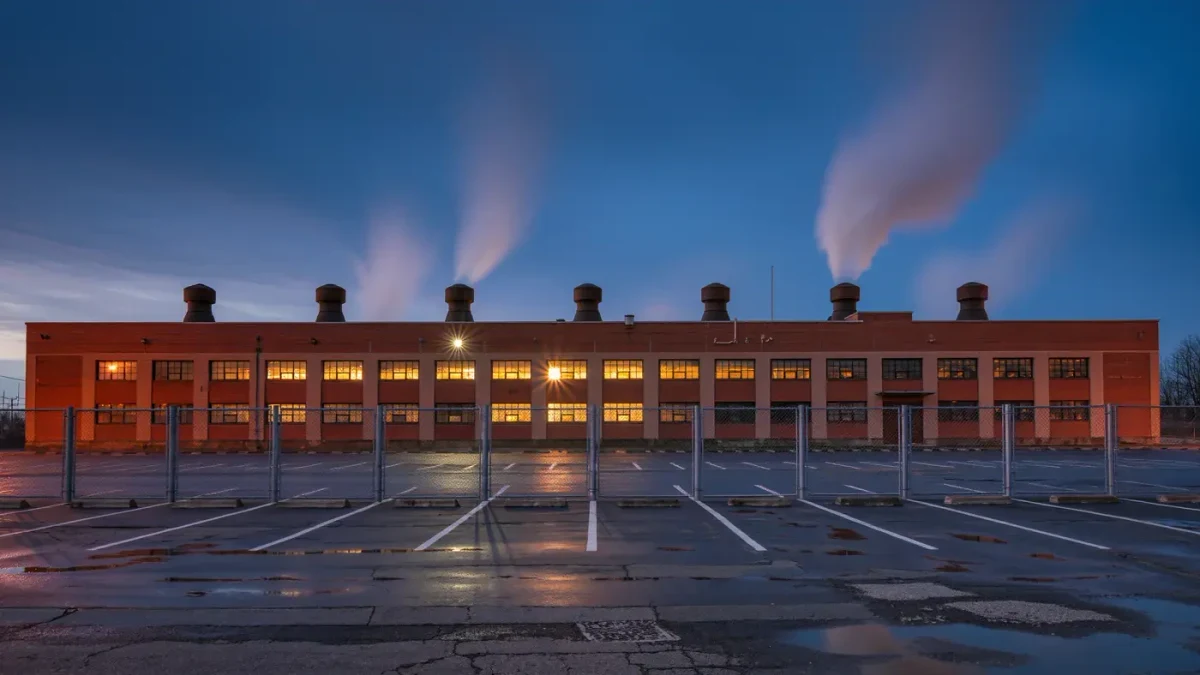
Textile mill capacity is measured in spindles, looms and finishing lines, and the United States count shrank again at the end of 2025: Elevate Textiles permanently closed its Burlington, North Carolina finishing plant on December 31, cutting 150 jobs, per the WARN notice the company filed and local coverage of it. The closure is one plant among many, but the document behind it — a federally required notice filed months before the machines stop — is the most honest capacity dataset the industry produces. Capacity exits through WARN notices, earnings calls and trade-association statistics, and through January 2026 the direction of all three is the same.
Why is a finishing plant closure different?
Because finishing is the step brands notice last. A finishing plant applies dye, coatings and performance treatments to fabric woven elsewhere, so its closure does not remove weaving capacity but removes the regional ability to finish it — pushing that work to other states or offshore, and adding freight and lead time to every downstream order. Per the Business NC report on the closure, the December 31 shutdown ends a decades-old Burlington operation. For apparel brands sourcing performance fabrics domestically, the practical effect is a shorter list of places to send greige goods and a longer negotiation about minimums at whatever remains.
What does the wider capacity picture show?
A slow contraction with pockets of investment. Per the closure roundups that trade press maintains, recent years took Gildan's Salisbury plant with 250 jobs and two Milliken facilities, alongside scattered openings in technical textiles. Per USDA market analysis published in late 2025, cotton-demand fundamentals stayed weak into the 2026 season, and per industry analysts cited in the same coverage, planted acreage in major exporting regions was shrinking. Capacity follows demand; when demand sits still, high-cost lines close first. The result is not collapse but consolidation — fewer, larger, more specialized plants, each closure concentrated in a county that notices.
Why does mill capacity matter to clothing prices?
Through optionality. When a brand can choose among several domestic finishing plants and several offshore ones, it plays bidders against each other and holds margin; when one link in that chain closes, the survivors gain pricing power over everyone upstream. Per the cost structure that sourcing analysts document, fabric is the largest single cost in a garment at roughly 35 to 50 percent, so anything that concentrates fabric supply feeds directly into the price conversation brands have every season. Capacity concentration is deflation's opposite, and it arrives without any consumer-visible announcement.
How can the capacity trend be tracked?
Through the same public trail the industry leaves. WARN notices name plants and headcounts months in advance and are searchable by state; the Bureau of Labor Statistics publishes textile mill employment monthly; and trade groups report spindle and loom counts annually. Per the BLS series through late 2025, textile employment continued its long decline with regional bumps where specialty mills expanded. None of this is secret. It is simply filed under industrial statistics rather than fashion news, which is why a 150-job closure in Burlington tells a more precise story about next year's clothing prices than any trend forecast published the same week.